재미있는 한국어jaemiinneun hangugeo

Fun Korean

Hangul, life in Korea, travel, history and short lessons.

Top Places to Visit in Korea

Korea's must-see places, from Seoul palaces to Busan's hillside villages, with 5 useful Korean phrases for each, with audio and a quick quiz.

  • Bulguksa Temple (불국사)
    Data: Korea Tourism Organization (한국관광공사)
    Gyeongju, Gyeongsangbuk-do

    Bulguksa Temple

    불국사

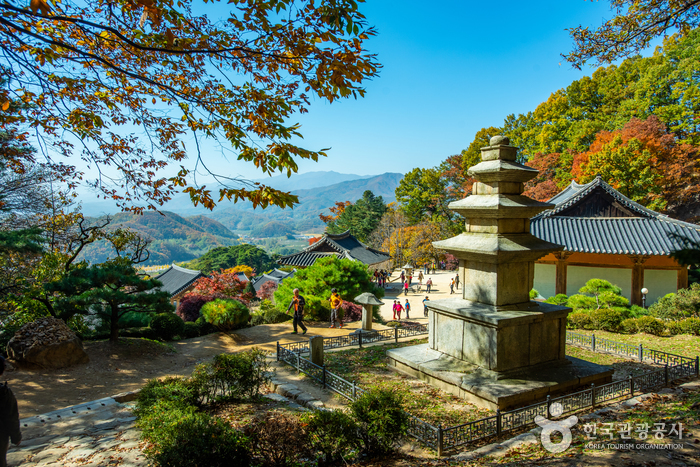
    A temple of the Silla kingdom, first built in the 6th century and rebuilt in 751. Together with nearby Seokguram Grotto it is a UNESCO World Heritage site. Look for the stone stairway-bridges at the entrance and the two stone pagodas, Dabotap and Seokgatap, in the main courtyard.

    Gyeongju is one of Korea's best places for autumn leaves. Seokguram Grotto is a short ride further up the mountain.

  • Andong Hahoe Village (안동 하회마을)
    Data: Korea Tourism Organization (한국관광공사)
    Andong, Gyeongsangbuk-do

    Andong Hahoe Village

    안동 하회마을

    One of Korea's best-known folk villages, wrapped by a bend of the Nakdonggang River and a UNESCO World Heritage Site. Descendants of the Pungsan Ryu clan still make up about 70 percent of the villagers. It was named a National Folklore Cultural Heritage in 1984, and the Hahoe masks, a National Treasure, come from here.

    Open every day: 09:00-18:00 April-September, 09:00-17:00 October-March (last admission 30 minutes before closing). People live here, so stay out of private homes.

  • Cheomseongdae Observatory (경주 첨성대)
    Data: Korea Tourism Organization (한국관광공사)
    Gyeongju, Gyeongsangbuk-do

    Cheomseongdae Observatory

    경주 첨성대

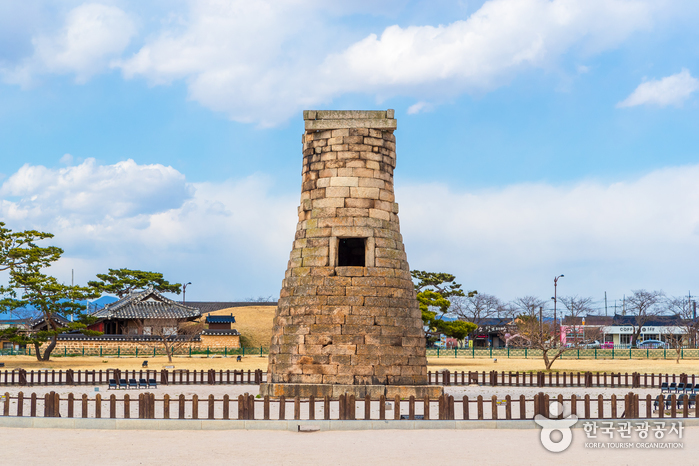
    A stone observatory from the reign of Silla's Queen Seondeok (632-647), and one of the oldest in the world. The tower is about 9 m tall and made of 365 stones, one for each day of the year, stacked in 27 layers. Flowers bloom around it in every season, so it is a favorite spot for photos.

    Open every day: 09:00-22:00 in summer, 09:00-21:00 in winter. It's lit up after dark.

  • Donggung Palace and Wolji Pond (경주 동궁과 월지)
    Data: Korea Tourism Organization (한국관광공사)
    Gyeongju, Gyeongsangbuk-do

    Donggung Palace and Wolji Pond

    경주 동궁과 월지

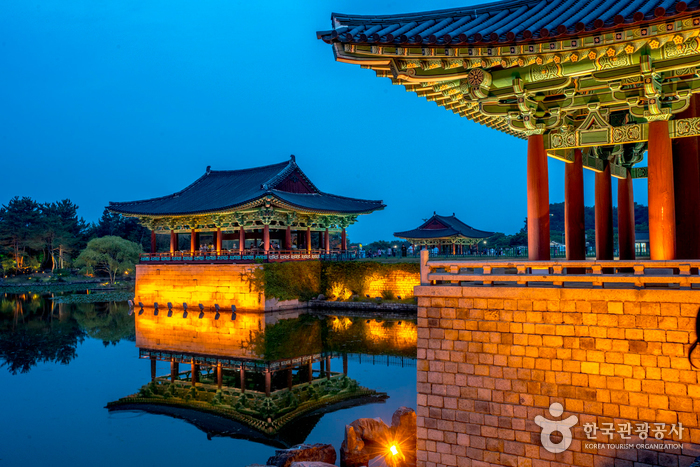
    The site of a Silla secondary palace, where the crown prince lived and royal banquets were held. King Munmu had the large pond dug in 674, with three islands in the middle and planted hills around it. The rebuilt pavilions reflected in the water are the classic view here.

    Open every day 09:00-22:00 (last ticket and admission 21:30). The evening is the most popular time.

  • Daereungwon Tomb Complex (경주 대릉원)
    Data: Korea Tourism Organization (한국관광공사)
    Gyeongju, Gyeongsangbuk-do

    Daereungwon Tomb Complex

    경주 대릉원

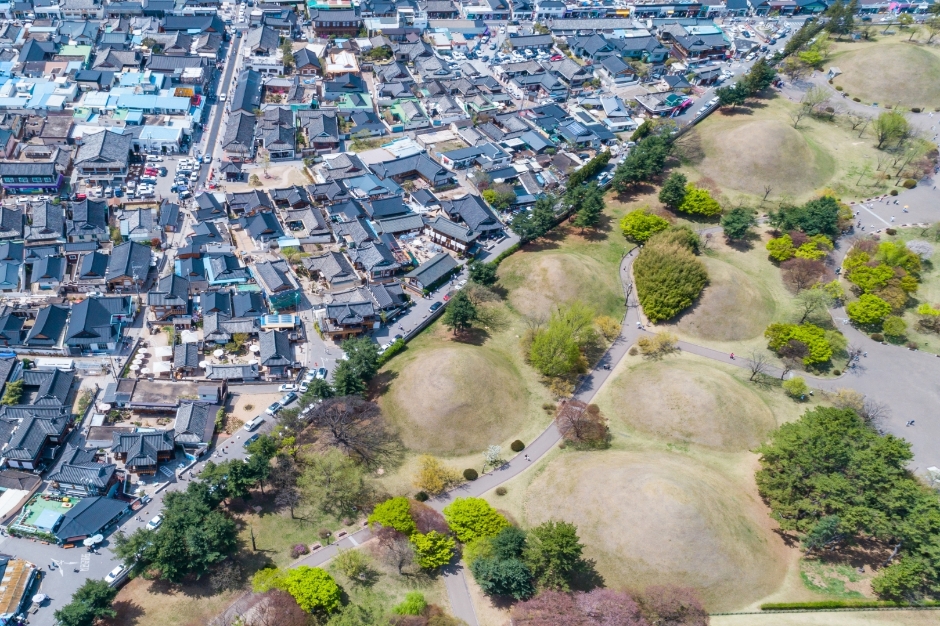
    A park of large, grass-covered ancient tombs in the middle of Gyeongju. Inside are Cheonmachong Tomb, excavated in 1973, and Hwangnamdaechong, twin tombs thought to belong to a married couple, excavated from 1973 to 1975. Paths wind between the round green mounds, making it a calm place for a walk.

    Open 09:00-22:00, all year round. Parking is available.

  • Buseoksa Temple (영주 부석사)
    Data: Korea Tourism Organization (한국관광공사)
    Yeongju, Gyeongsangbuk-do

    Buseoksa Temple

    영주 부석사

    A temple on the eastern slope of Sobaeksan Mountain, founded in 676 during the Silla kingdom. It has been rebuilt and expanded many times and keeps many cultural treasures. Its Muryangsujeon Hall is often called one of the most beautiful traditional buildings in Korea, and the temple is a UNESCO World Heritage site.

    Open 24 hours, all year round. Parking is available. Guided tours are offered.

  • Yangdong Village (경주 양동마을)
    Data: Korea Tourism Organization (한국관광공사)
    Gyeongju, Gyeongsangbuk-do

    Yangdong Village

    경주 양동마을

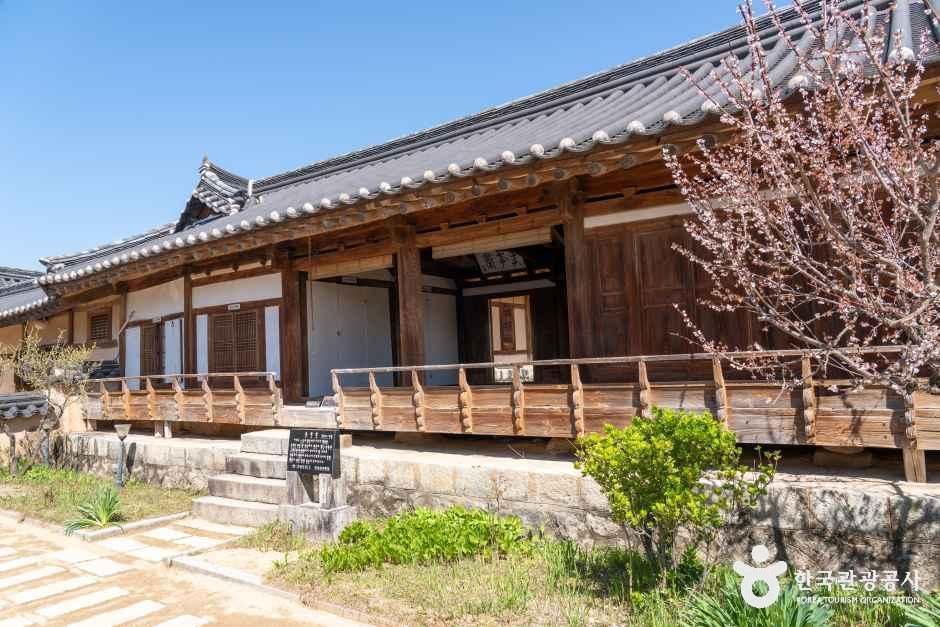
    Korea's largest traditional village from the Joseon dynasty, set in a valley with Seolchangsan Mountain beyond it. About 160 old houses, including 500-year-old thatched-roof cottages, sit on the hillsides, and the whole village is a UNESCO World Heritage site.

    Open 09:00-19:00 (Apr-Sep) and 09:00-18:00 (Oct-Mar); last ticket 1 hour before closing. People still live in the village, so don't enter houses without permission. Parking is available.

  • Homigot Cape and Lighthouse (호미곶 등대)
    Data: Korea Tourism Organization (한국관광공사)
    Pohang, Gyeongsangbuk-do

    Homigot Cape and Lighthouse

    호미곶 등대

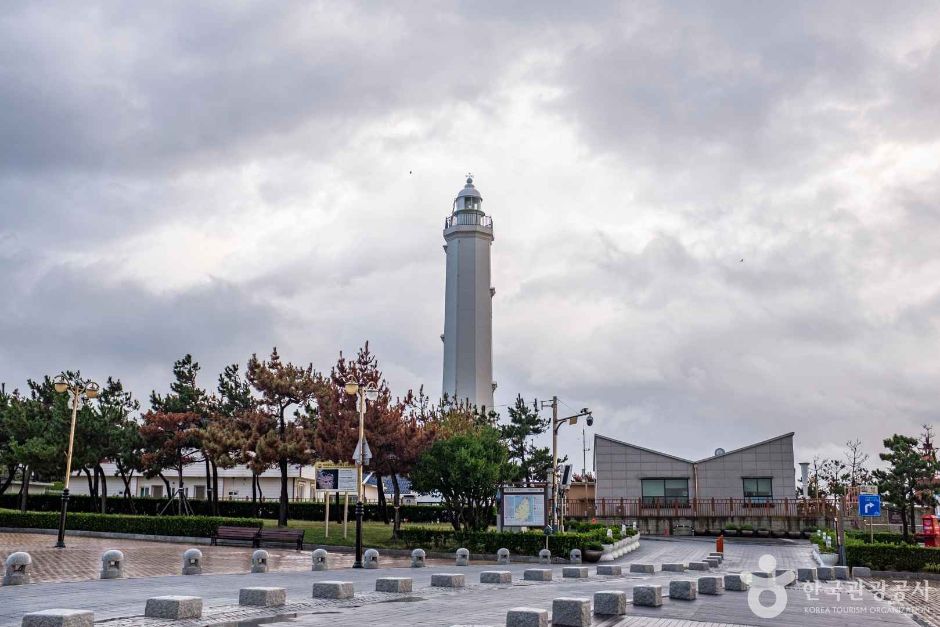
    Homigot Cape was counted among the ten most scenic places in Korea in the Joseon dynasty. Its lighthouse opened on December 20, 1908, and was then the tallest in Korea: an eight-sided, six-story red-brick tower 26.4 m high, built without steel reinforcement, with pear-blossom patterns carved on the ceiling of each floor.

    Open 24 hours, all year round. Free parking.

  • Dosanseowon Confucian Academy (도산서원)
    Data: Korea Tourism Organization (한국관광공사)
    Andong, Gyeongsangbuk-do

    Dosanseowon Confucian Academy

    도산서원

    A UNESCO World Heritage Confucian academy in Andong. It has two parts: Dosanseodang, where the great scholar Yi Hwang (Toegye) lived and taught, with a lecture hall he designed himself in 1561, the oldest building here; and Dosanseowon, finished by his followers in 1576, six years after his death, to honor him and carry on his teaching.

    Open 09:00-18:00 in summer and 09:00-17:00 in winter, all year round. Parking is available.

Data: Korea Tourism Organization (한국관광공사), via TourAPI. Photos are shown as provided, uncropped. Facts are checked against VisitKorea and official festival sites, and the descriptions are our own. Dates can change, so check the official site before you travel.