재미있는 한국어jaemiinneun hangugeo

Fun Korean

Hangul, life in Korea, travel, history and short lessons.

Korean Food Tour: Famous Markets and Food Streets

Famous Korean food markets and streets and what to eat there, with 5 Korean phrases for ordering, with audio and a quick quiz.

  • Sokcho Tourist & Fishery Market (속초관광수산시장)
    Data: Korea Tourism Organization (한국관광공사)
    Sokcho, Gangwon-do

    Sokcho Tourist & Fishery Market

    속초관광수산시장

    Sokcho's big market, formerly called Jungang Market. Its chicken alley is famous for dakgangjeong, crispy fried chicken in a sweet and spicy glaze, sold by the box to take away. The raw fish center sells the day's catch, and you'll also find squid sundae (stuffed squid) and dried seafood.

    Easy to pair with Seoraksan: local buses run between Sokcho and the park.

  • Chuncheon Dakgalbi Street (춘천 명동 닭갈비골목)
    Data: Korea Tourism Organization (한국관광공사)
    Chuncheon, Gangwon-do

    Chuncheon Dakgalbi Street

    춘천 명동 닭갈비골목

    A 150 m alley off Chuncheon's Myeong-dong shopping street, lined on both sides with dakgalbi restaurants. Spicy marinated chicken is stir-fried with cabbage, sweet potato and rice cakes on a big iron pan at your table. Finish with fried rice made in the same pan, or cold makguksu buckwheat noodles.

    Most places serve dakgalbi for two or more. ITX-Cheongchun trains run from Seoul to Chuncheon.

  • Chodang Tofu Village (강릉 초당두부마을)
    Data: Korea Tourism Organization (한국관광공사)
    Gangneung, Gangwon-do

    Chodang Tofu Village

    강릉 초당두부마을

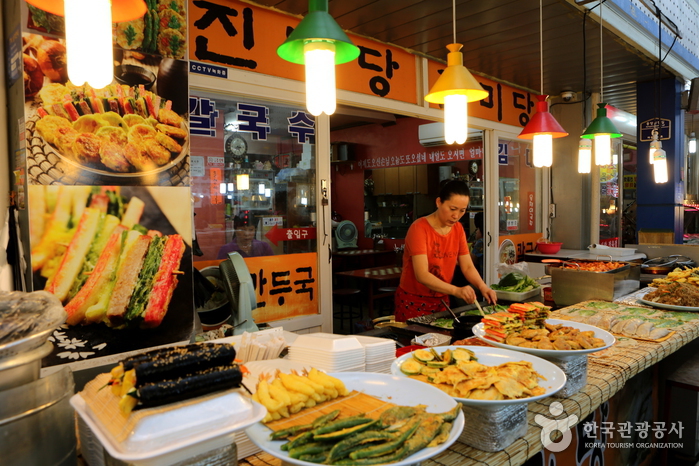
    Just south of Gyeongpo Beach, this village is famous for Chodang tofu, made from ground soybeans and seawater from the East Sea, which makes it soft and light. The name comes from Chodang Heo Yeop, father of the Joseon writers Heo Gyun and Heo Nanseolheon; a traditional house has been rebuilt where their family home once stood.

    Each restaurant keeps its own hours. Parking is available.

  • Daepo Port Fried Food Alley (속초 대포항 튀김골목)
    Data: Korea Tourism Organization (한국관광공사)
    Sokcho, Gangwon-do

    Daepo Port Fried Food Alley

    속초 대포항 튀김골목

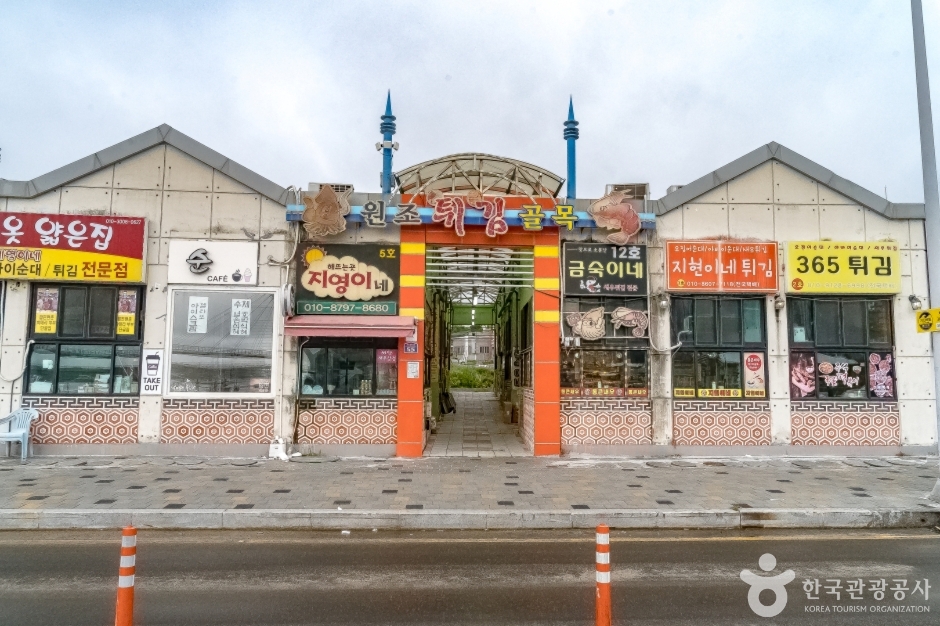
    An alley at Daepo Port, about 10 minutes' drive from downtown Sokcho, known for fresh seafood fritters and local snacks. Stalls fry shrimp, crab, peppers, perilla leaves and sweet potatoes, and also sell port-style squid sundae and sweet-and-spicy braised shrimp. Among the seafood markets and raw-fish restaurants around the port, it is especially popular with younger visitors.

    Hours and closed days vary by stall. Parking is available.

  • Soyangho Makguksu Street (춘천 소양호 막국수거리)
    Data: Korea Tourism Organization (한국관광공사)
    Chuncheon, Gangwon-do

    Soyangho Makguksu Street

    춘천 소양호 막국수거리

    A street of makguksu restaurants near Soyangho Lake. Makguksu noodles are made from coarse buckwheat flour with only the outer husk removed; once served to honoured guests around Chuncheon, they became an everyday food in the hard years after the Korean War. Eat them in cold kimchi or dongchimi broth, or dry with vegetables and seasoning, and add vinegar, mustard or broth to taste.

    Hours and closed days vary by restaurant. A buckwheat pancake (memilbuchim) goes well with the noodles.

  • Wonju Jungang Market (원주 중앙시장)
    Data: Korea Tourism Organization (한국관광공사)
    Wonju, Gangwon-do

    Wonju Jungang Market

    원주 중앙시장

    A market in central Wonju that began as a five-day market in the 1950s and now opens every day, with about 370 shops and a food street of restaurants side by side. On the second floor, the Maze Art Market has winding lanes of small design shops and eateries; the market was named a cultural market in 2015.

    Shop hours vary. Restrooms are on the 2nd floor. Head upstairs to explore the Maze Art Market.

  • Yeongwol Seobu Morning Market (영월 서부아침시장)
    Data: Korea Tourism Organization (한국관광공사)
    Yeongwol, Gangwon-do

    Yeongwol Seobu Morning Market

    영월 서부아침시장

    A downtown market in Yeongwol since 1959. As the name says, it was a morning market: farmers came at dawn to sell their produce and went back to the fields at noon. Local farm goods are still sold here, and the market is known for its row of shops making wheat and buckwheat pancakes, and for sweet crispy fried chicken (dakgangjeong).

    Hours vary by shop.

  • Yangyang Traditional Market (양양전통시장)
    Data: Korea Tourism Organization (한국관광공사)
    Yangyang, Gangwon-do

    Yangyang Traditional Market

    양양전통시장

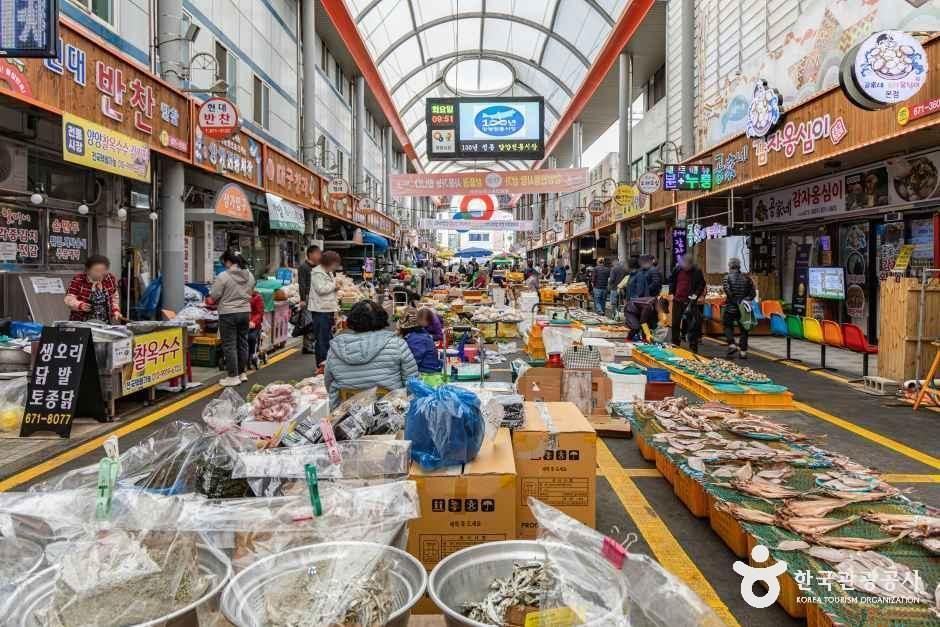
    Yangyang lies where Seoraksan and Odaesan mountains meet the East Sea, so goods from the mountains and from the coast have long been traded here. The market has a five-day market on dates ending in 4 and 9, and what you find changes with the seasons.

    Five-day market on dates ending in 4 and 9; shop hours vary. Parking and restrooms are available.

Data: Korea Tourism Organization (한국관광공사), via TourAPI. Photos are shown as provided, uncropped. Facts are checked against VisitKorea and official festival sites, and the descriptions are our own. Dates can change, so check the official site before you travel.